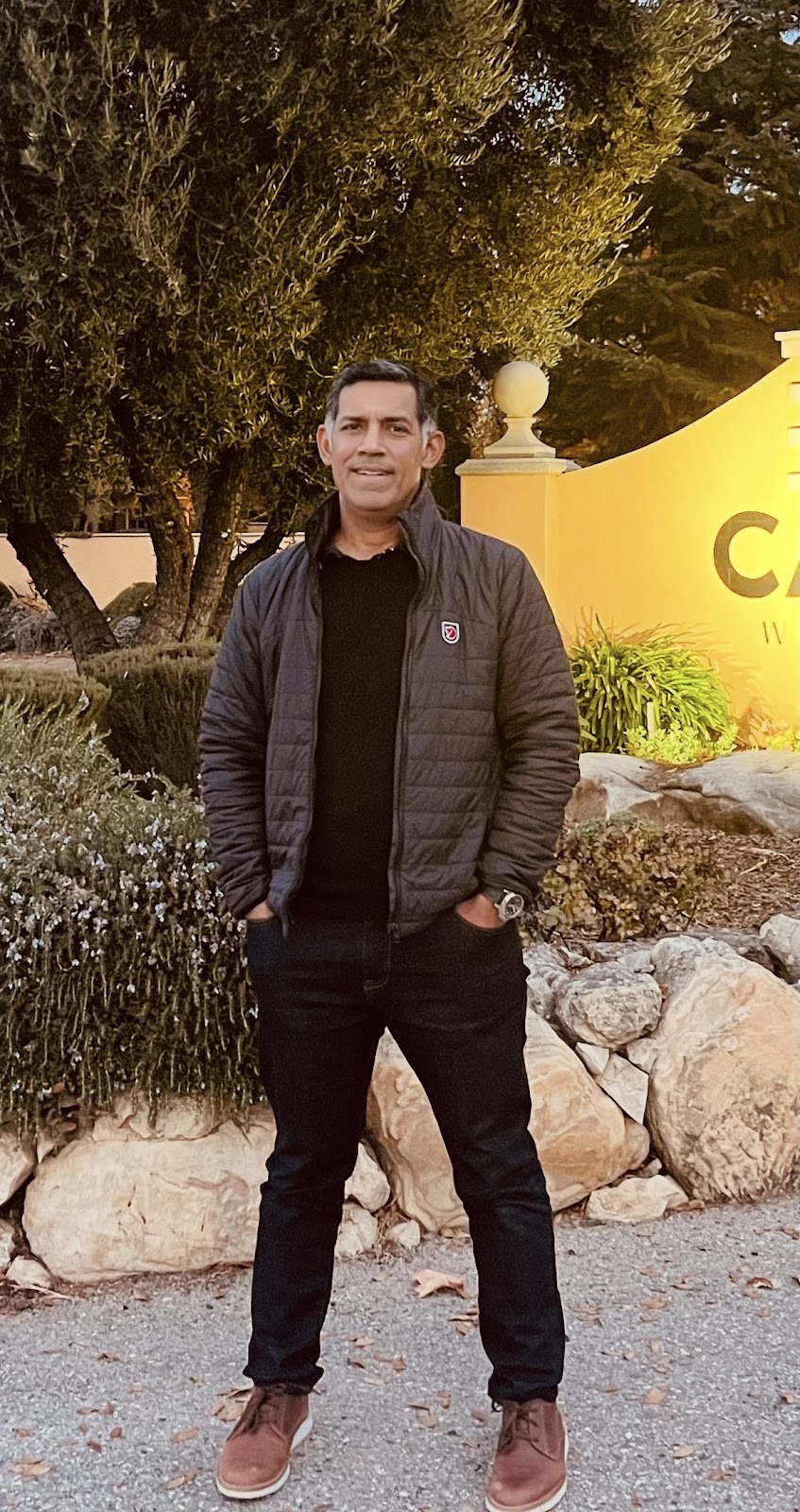
A journey from childhood fascination to discovering the wines, people, and hospitality of Tuscany
by Prem Menon
A very close friend of mine visited Italy recently and brought me back a magnet with the words “In Vino Veritas,” which translates to “in wine there is truth.” And truth be told, my visit to Italy in late 2023 and what I witnessed there was definitely mind-opening. More on that in a bit.
As a kid growing up in India, I was in awe of Ferrari. I collected every Ferrari Hot Wheels car I could find. As I grew older, my fascination with Italy only grew. Watches and fashion introduced me to Panerai, Armani, Versace, and Dolce & Gabbana. My love of physics drew me to the science behind Leonardo da Vinci’s inventions, while the architecture of Rome and Florence, and the awe-inspiring vistas of the Amalfi Coast, captured my imagination. Italy had been part of my world long before I ever set foot there.
And then came wine. One of the first wines my naive taste buds fell in love with was Moscato d’Asti. Easy, bubbly, and frankly, it didn’t really feel like I was drinking alcohol. Fast-forward a couple of decades, and I had developed a real fondness for wine. Then came COVID, and like everyone else, I found myself stuck at home.
I spent much of 2020 and 2021 researching, trying, and collecting Italian wines. Having lived in California, this was my first real deep dive into Old World wines. How different could they be? After all, it’s wine. How wrong could I have been.
One thing that quickly hits you about Italian wine, more than perhaps any other country, is that it’s like a game of Monopoly that never ends. You try a region. Then another region and varietal. Then a few more, and suddenly you realize the game just keeps going. There is the light, fruity, flowery Sangiovese from Tuscany, like a gentle wind blowing a single strand of hair on a summer day. Then, all of a sudden, here comes a gale storm from Piedmont that knocks you off your feet, and somehow you still like it. Like, what was that? Let’s do that again.
The more I explored, the less I realized I knew. I was moving from unconsciously incompetent to consciously incompetent. And the bottles I could find in California wine shops no longer satisfied my curiosity. I wanted to experience these wines where they were made. I had to go to Italy.
But where to start? Corporate America was going to give me, at best, a week off. So the engineer and researcher in me took over. I dove into blogs, travel programs, and, of course, my own taste buds. I still remember a sleepy-eyed late weekend night when my research led me to Montepulciano. A legitimate wine destination, yes, but also home to a Christmas market touted as one of Europe’s top ten. Perfect. Our kids could explore the market and hunt for holiday trinkets while my wife and I went on our wine escapades.
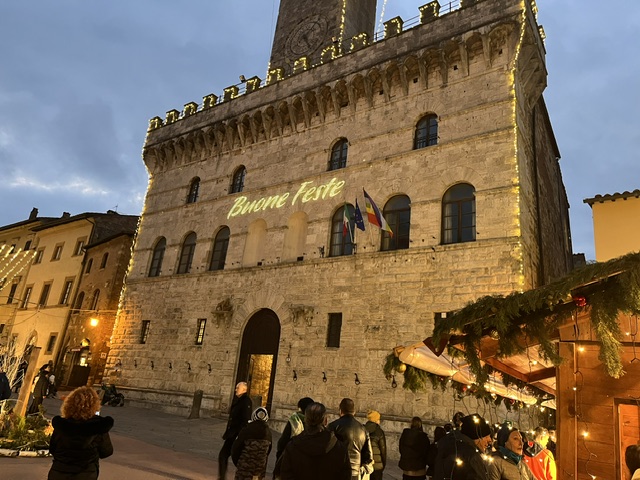
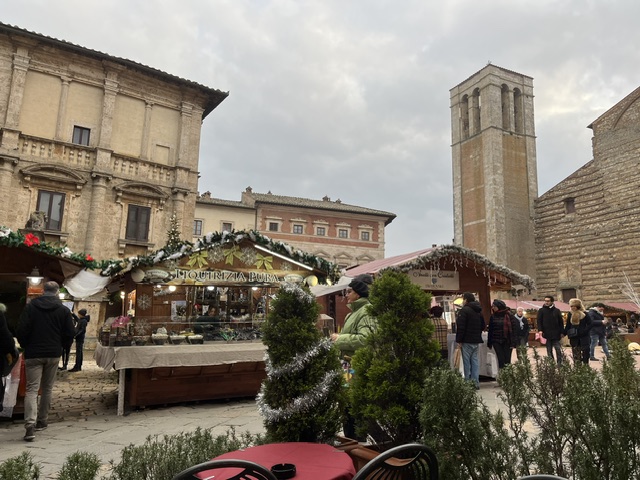
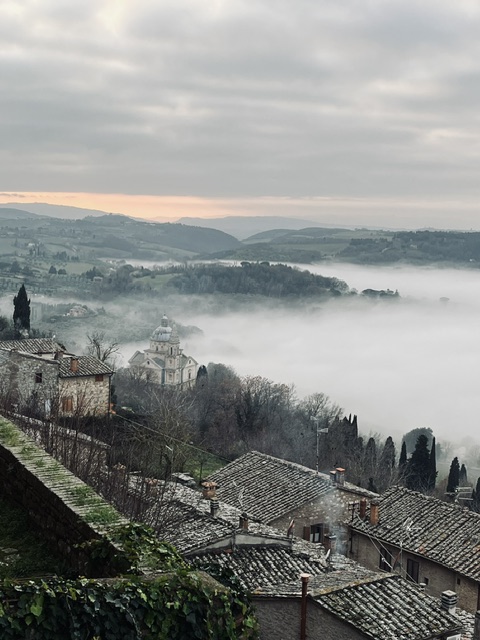
Then I saw the photos. This medieval town seemed to rise above the clouds. The town square looked magical and festive, and even its signature wine had the word “Nobile” in its name. I was sold.
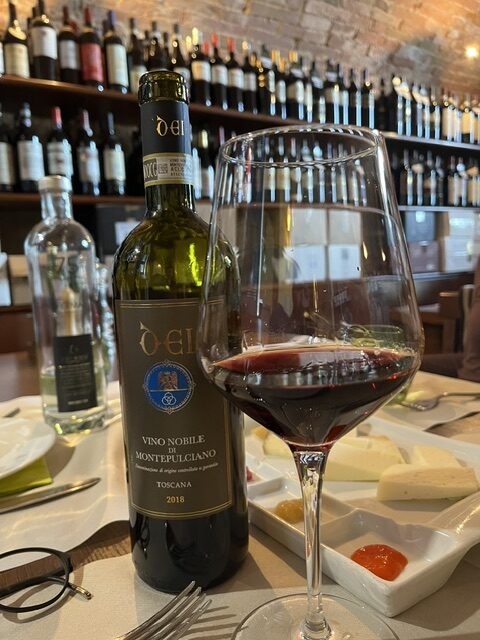
Old habits die hard. I researched and re-researched, and then some more. I read about a sommelier in Montepulciano whose mom ran a fantastic must-try restaurant and who himself ran a wine club. He also happened to have been selected as the sommelier when President Obama visited Italy. So now I had to figure out a way to get to him. His family also ran a bed and breakfast. I was all set. I booked a room, I was going to meet this rockstar somm, and I could not wait.
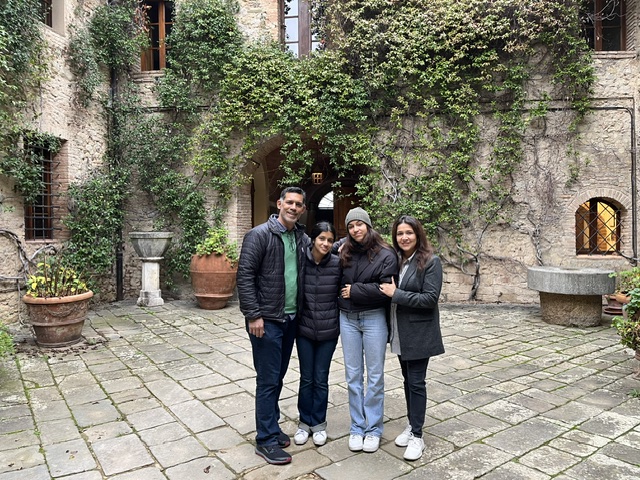
We arrived at his bed and breakfast and went straight to his restaurant. After a long journey and hauling our luggage up this steep medieval town, we were more than ready for some wine and Florentine Bistecca. I was greeted by the somm himself. A great start. Then he asked me what wine I would like. I opened my Vivino app (a novice thing to do, I realized) and started looking up the wines. I picked a bottle. And then he asked me the question I will never forget: Why did you pick this particular bottle?
Aaahh… I mean… what I thought… the point rating, the price range, were the best words that could come out of my lips. He smiled, then gently asked, “Can I pick one for you?” Remember I told you Italy was mind-opening?
Mind-opening phase 1: Montepulciano
He picked a wine at half the price and simply told me, “If you don’t like it, the bottle is on me.” Up until now, my experience had been that folks tried to sell me a more expensive bottle, and when I chose one, they usually agreed. “Great choice, sir,” and moved on. But that was not the case here. I somehow got the feeling my next three days were going to be a schooling in Italian wine, and I was gonna love it.
I surrendered to this guy. I told him point-blank he could guide me, and he gladly accepted. The wine came, and at first sip I loved it. It also went supremely well with the Florentine Bistecca. For the next three days he was like a guru. I learned that price is not always a 2 good indicator in Italy as it was in the US. A lot of the estates are old and paid for, and Italians produce some fantastic quality wine at very reasonable prices, compared to the US, where many wine growers are still paying a hefty price for their land. He told me he had several great wines from local growers that never made it to the mass market because they didn’t want to get that big. They kept their marketing low and were accessible if we came to Italy. Over the next several days he saved me hundreds, if not thousands, on expensive wine.
Mind-opening phase 2: Montalcino
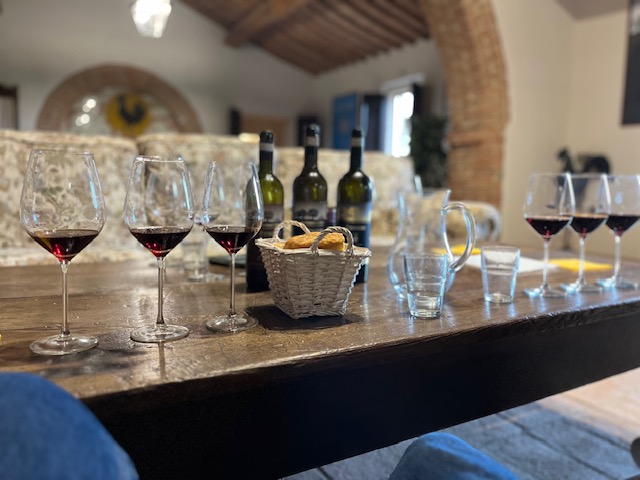
We planned a visit to a world-class vineyard whose wines I had tried and loved. We were taken to a room the size of a house. The host pulled up with a bottle. He poured some, a generous pour, told us a bit about the wine, left the bottle with us on a lovely center table the size of a pool table, and took off. This process repeated seven times. He brought a bottle, poured generously, told us about the wine, and disappeared for a while, leaving the bottle with us.
These were world-class, highly rated wines. Yes, you caught me. I said rated. But this time I said that to make a point. These wines are reputed and rated on the world stage, and yet these vineyard hosts found it quite alright not to pour a minuscule taste and watch us like a hawk, counting down the clock. And when it came time to pay, it was us searching for him because we had to return to our hotel, rather than him chasing us. When we asked where we could grab a bite, he came back saying, “Reservation done. You will like it.” Just like that. The restaurant was quaint and top-class.
Soon we had to return to Rome and head back home. Our hearts were full and our minds a bit humbled by the pragmatism, the grounded love for wine, the no-compromise hospitality, and an innate ability to make you feel at home. Every stay, every tasting felt like we were having the experience at our coffee table or at a dear friend’s place, without even a hint of pretension. And yet we knew we were among people who knew their wine, had a passion for their craft, and still knew not to take life too seriously.
If I could offer one suggestion to anyone setting out to experience Italy and its fine wines, it would be this: Don’t rush it.
Italy has an extraordinary diversity of wine regions, each with its own personality. From the renowned, bold Nebbiolo-based wines of Piedmont to the maverick winemakers of Bolgheri who challenged convention with their Super Tuscans, to the beautiful Sangiovese-based wines of Montepulciano and Montalcino in Tuscany. And that’s barely scratching the surface.
Rather than trying to cover it all, pick a region. Spend time there. Find someone knowledgeable who can introduce you to its wines, its nuances, and perhaps even how they compare with those from other parts of Italy. Each region has its own character, each wine brings something special to the party, and every winemaker and hospitality professional has a story and expertise worth discovering.
But for all their differences, I found one thing remarkably consistent: an absolute love for their craft and a genuine warmth and willingness to share it. Not just the wine, but the knowledge, the stories, and the experiences that make it special. And perhaps that’s what stayed with me the most. I went to Italy wanting to understand its wines a little better. I came back appreciating its people a whole lot more.
There is an Italian phrase, “Dolce far niente,” that literally translates to “the sweetness of doing nothing.” When life gets hectic and stuffy, we remind ourselves of that, and how we experienced exactly that and more in Montepulciano above the clouds and in the endless green fields and hills of Tuscany.
For more wine insight by Prem, visit his blog: