Learn how to decode Italian wine labels and confidently choose exceptional wines—from everyday favorites to world-renowned vintages
Italy is home to more than 500 native grape varieties and produces some of the world’s most celebrated wines. From the rolling vineyards of Tuscany to the volcanic slopes of Sicily and the sparkling hills of Veneto, every region offers its own unique expression of Italian winemaking.
If you’ve ever looked at an Italian wine label and wondered what DOC, DOCG, or IGT actually mean, you’re not alone. These official classifications help guarantee a wine’s origin, production methods, and quality standards. Understanding them can make selecting the perfect bottle much easier.
Here’s everything you need to know about Italy’s wine classification system.
The History Behind Italian Wine Classifications
Italy introduced its modern wine classification system in 1963 to protect regional traditions, combat fraud, and establish consistent quality standards. Inspired by France’s appellation system, Italy created regulations that specify:
- Where grapes may be grown
- Which grape varieties are permitted
- Vineyard yields
- Aging requirements
- Winemaking techniques
Today, these classifications help preserve centuries of Italian winemaking heritage while giving consumers confidence in what’s inside the bottle.
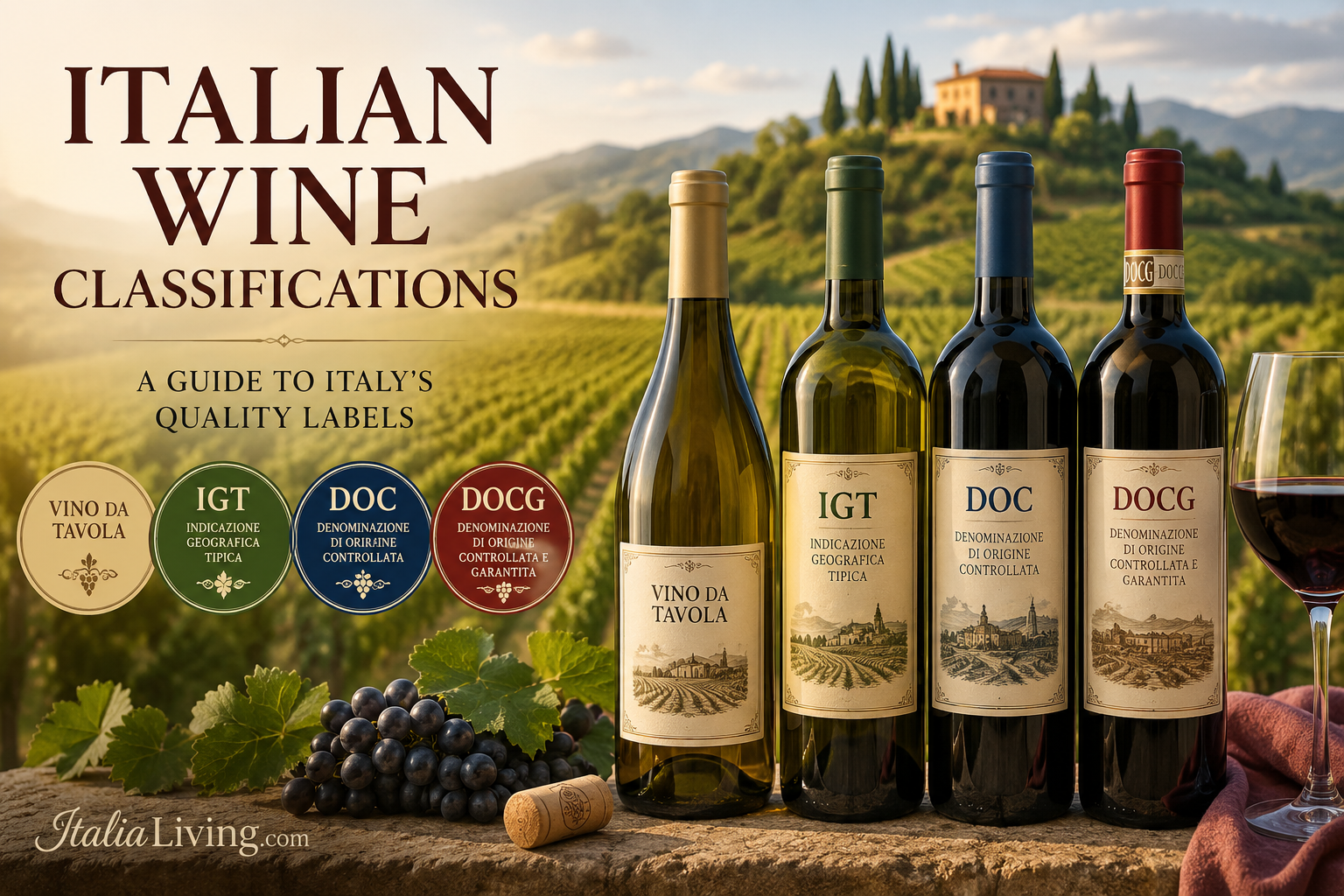
Vino da Tavola (Table Wine)
At the foundation of the classification system is Vino da Tavola, or table wine.
Historically, these wines carried little information beyond the producer’s name. They offered few restrictions on grape varieties or production methods, allowing winemakers complete creative freedom.
While this category once represented inexpensive everyday wines, some innovative producers used it to experiment with international grape varieties before newer classifications were introduced.
Characteristics
- Few production regulations
- Usually affordable
- Ideal for casual drinking
- Flexible winemaking styles
IGT – Indicazione Geografica Tipica
Introduced in 1992, IGT bridges the gap between table wine and the stricter DOC classifications.
This category allows winemakers greater freedom while still identifying the wine’s geographic origin.
Many of Italy’s famous “Super Tuscan” wines were originally labeled as IGT because they blended international grapes like Cabernet Sauvignon and Merlot with traditional Sangiovese—styles that didn’t fit DOC rules at the time.
Characteristics
- Protected geographic origin
- More freedom with grape varieties
- Innovative blends encouraged
- Excellent quality at attractive prices
Popular IGT Wines
- Toscana IGT
- Veneto IGT
- Terre Siciliane IGT
- Puglia IGT
DOC – Denominazione di Origine Controllata
The DOC classification is one of Italy’s most recognized quality designations.
DOC wines must meet strict regulations governing:
- Vineyard location
- Authorized grape varieties
- Maximum yields
- Alcohol levels
- Aging requirements
- Production methods
Every DOC wine reflects the traditions and identity of its specific region.
Famous DOC Wines
- Soave
- Frascati
- Orvieto
- Valpolicella
- Vernaccia di San Gimignano
With more than 330 DOC appellations, Italy offers an extraordinary range of styles and flavors.
DOCG – Denominazione di Origine Controllata e Garantita
The highest official classification in Italian wine is DOCG.
To achieve DOCG status, a wine must first demonstrate years of excellence as a DOC wine while meeting even stricter production standards.
Each DOCG wine undergoes additional government tasting and quality certification before being released.
Many bottles also carry a numbered government seal around the neck as proof of authenticity.
Examples of Prestigious DOCG Wines
- Brunello di Montalcino
- Barolo
- Barbaresco
- Chianti Classico Gran Selezione
- Vino Nobile di Montepulciano
- Amarone della Valpolicella
These wines represent some of Italy’s finest expressions of terroir and craftsmanship.
DOP – Denominazione di Origine Protetta
You may also notice the abbreviation DOP on some labels. DOP is the European Union’s designation that encompasses both DOC and DOCG wines.
Many Italian producers continue using the familiar DOC or DOCG terminology because consumers recognize these classifications more readily.
PGI – Protected Geographical Indication
At the European level, PGI corresponds to Italy’s IGT classification.
This designation confirms that the wine originates from a particular geographic area while allowing greater flexibility in production than DOP wines.
Does DOCG Always Mean Better?
Not necessarily. While DOCG wines adhere to the strictest regulations, exceptional wines can also be found in the IGT and DOC categories.
Many award-winning Super Tuscans remain classified as IGT because producers intentionally choose greater creative freedom over stricter appellation rules.
The best bottle ultimately depends on your personal taste, the producer’s reputation, the vintage, and the style you’re seeking.
Tips for Reading an Italian Wine Label
When shopping for Italian wine, look for:
- Classification (DOCG, DOC, IGT)
- Wine region
- Producer’s name
- Vintage year
- Grape variety (when listed)
- Alcohol percentage
Learning these basics will make choosing Italian wines far less intimidating.
Every Bottle Tells a Story
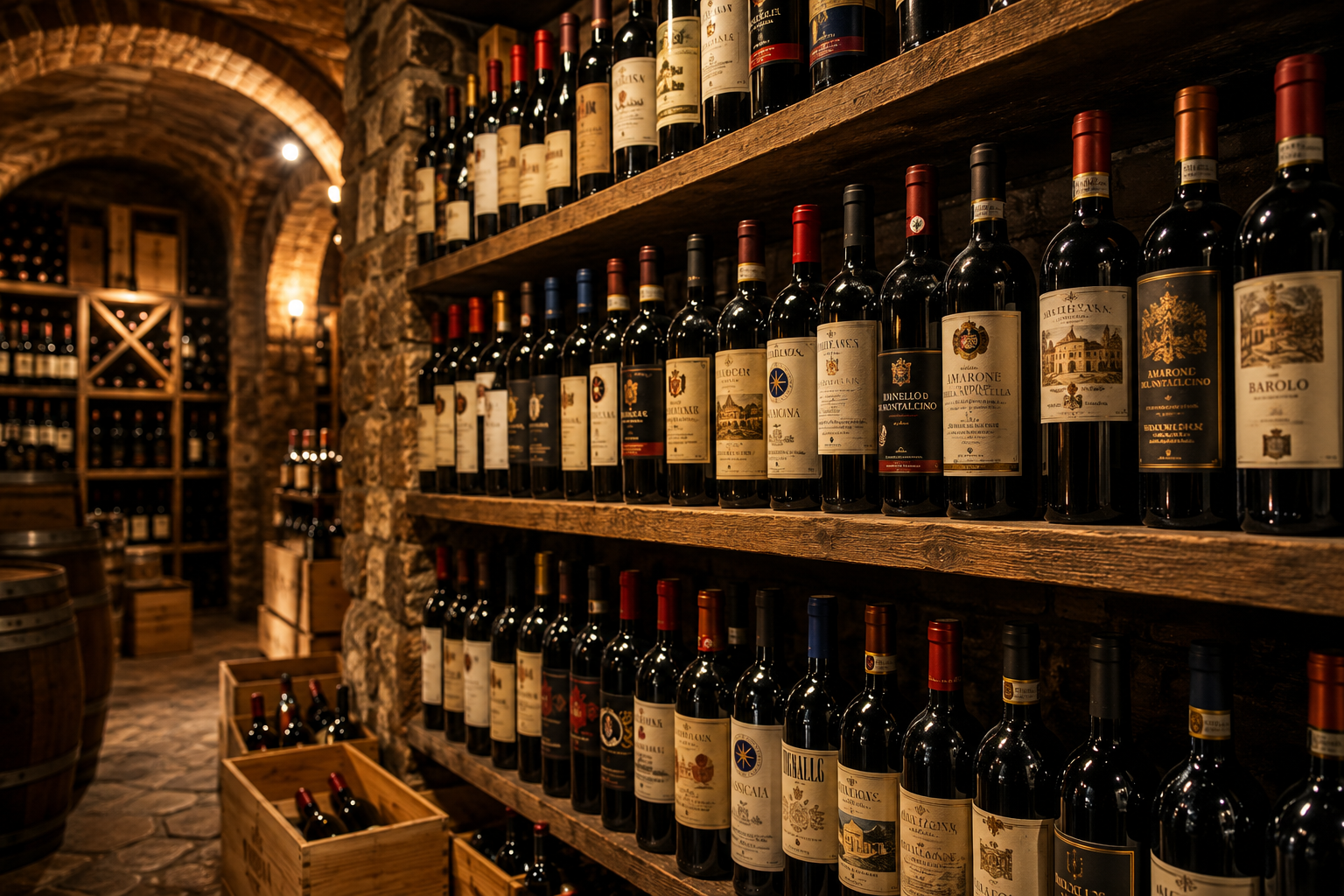
Italy’s wine classification system is much more than a collection of initials—it represents centuries of tradition, regional identity, and a commitment to quality. Whether you’re enjoying a crisp Pinot Grigio from Veneto, a bold Barolo from Piedmont, or a refined Brunello di Montalcino from Tuscany, understanding these classifications enhances your appreciation of every glass.
The next time you’re browsing the wine aisle, take a closer look at the label. Those small letters—IGT, DOC, and DOCG—tell a fascinating story about where the wine comes from and the craftsmanship behind every bottle.