Murano glass is not merely an object; it is a living expression of Venice’s creative spirit
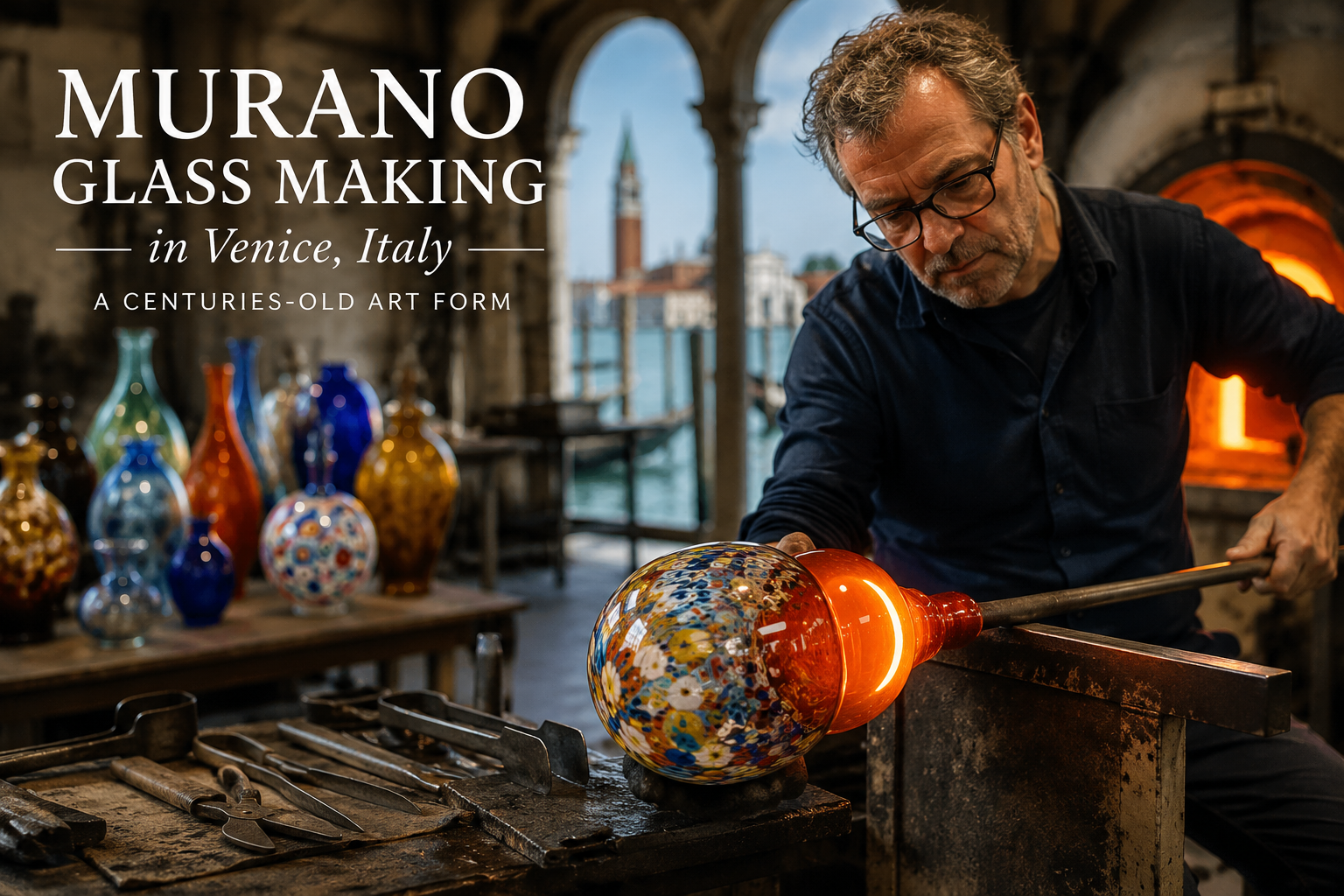
For centuries, the shimmering beauty of Murano glass has captivated collectors, designers, and travelers from around the world. Crafted by master artisans on the small Venetian island of Murano, this extraordinary art form represents one of Italy’s most treasured cultural traditions. From dazzling chandeliers and elegant vases to intricate jewelry and contemporary sculptures, Murano glass remains a symbol of Italian craftsmanship, creativity, and luxury.
A Legacy Born from Fire
The story of Murano glass begins in 1291, when Venetian authorities ordered all glassmakers to move their furnaces from Venice to the nearby island of Murano. The decision was largely practical: the intense heat of glass furnaces posed a significant fire risk to Venice’s densely built wooden structures.
However, the move had an unexpected consequence. Murano quickly became the world’s center of glassmaking innovation. Venetian glassmakers developed techniques that were closely guarded secrets, and their creations became highly sought-after across Europe.
For generations, Murano artisans refined their craft, pioneering methods such as crystal-clear glass, enamel decoration, gold leaf infusion, and millefiori—one of the most recognizable Murano styles today.
The Art of Glass Making
Creating Murano glass is a remarkable process that combines technical precision with artistic intuition. The journey begins with silica sand, soda ash, limestone, and other minerals melted in furnaces reaching temperatures above 1,400°C (2,550°F).
Once the glass reaches a molten state, master artisans gather the glowing material on the end of a blowpipe and begin shaping it through a combination of blowing, stretching, twisting, and sculpting.
Each piece is formed by hand, making no two creations exactly alike.
The process requires years of training and experience. A single mistake can ruin hours of work, which is why Murano glassmasters are among the most respected artisans in Italy.
Famous Murano Glass Techniques:
Millefiori
Meaning “a thousand flowers,” millefiori involves layering colorful glass rods that reveal intricate floral patterns when sliced. These patterns are then incorporated into bowls, paperweights, jewelry, and decorative art.
Sommerso
This technique layers multiple colors of glass, creating a stunning effect where colors appear suspended within one another. Sommerso pieces are particularly prized by collectors.
Filigrana
Filigrana uses delicate threads of colored or white glass embedded within clear glass, producing elegant striped and lace-like designs.
Aventurine
A uniquely Venetian innovation, aventurine glass contains tiny metallic crystals that sparkle when exposed to light, creating a luxurious shimmering effect.
Visiting Murano Today
Just a short vaporetto ride from Venice, Murano remains a fascinating destination for travelers interested in art, history, and Italian culture.
Visitors can tour working glass factories, watch live demonstrations by master glassblowers, and explore galleries filled with both traditional and contemporary designs. Many workshops welcome guests, offering a rare opportunity to witness centuries-old techniques firsthand.
Among the highlights are the Murano Glass Museum, historic furnaces, and boutiques showcasing works ranging from affordable souvenirs to museum-quality masterpieces.
Watching a glowing mass of molten glass transform into an elegant vase or intricate sculpture within minutes is an unforgettable experience.
How to Identify Authentic Murano Glass
Because Murano glass is renowned worldwide, imitation products have become increasingly common. Authentic Murano glass is handmade on the island by skilled artisans and often carries a certificate of authenticity or trademark certification.
When shopping, look for:
- Certification from reputable Murano producers
- Evidence of handcraftsmanship rather than machine perfection
- Established galleries and workshops located on Murano
- Artist signatures on higher-end pieces
Authentic Murano glass may contain slight variations and imperfections, which are signs of genuine handmade artistry.
Murano Glass in Modern Design
Today, Murano glass continues to evolve. Contemporary designers collaborate with traditional workshops to create innovative lighting, furniture accents, architectural installations, and luxury décor.
Leading hotels, fashion houses, and interior designers frequently commission custom Murano creations, ensuring that this centuries-old tradition remains relevant in the modern world.
From grand chandeliers illuminating palaces to minimalist sculptures adorning contemporary homes, Murano glass bridges the gap between heritage and innovation.
Preserving a Living Tradition
In an age of mass production, Murano glass stands as a testament to the enduring value of craftsmanship. Every piece carries with it centuries of knowledge, artistic dedication, and Italian cultural heritage.
For visitors to Venice, a journey to Murano offers more than beautiful souvenirs—it provides a glimpse into one of Italy’s most extraordinary artistic traditions. The glow of the furnace, the skill of the artisans, and the timeless beauty of the finished works continue to inspire admiration around the globe.
Murano glass is not merely an object; it is a living expression of Venice’s creative spirit, preserved through generations and shaped by fire, imagination, and passion.