Italy’s cafés are more than places to drink coffee — they are cultural landmarks woven into daily Italian life
Italy’s café culture is about far more than coffee. A true Italian café is a place where daily life unfolds slowly — where locals pause for an espresso at the counter, conversations linger over cappuccinos, and elegant interiors reflect generations of history and tradition.
From grand historic cafés to charming neighborhood institutions, these iconic destinations offer some of the best ways to experience authentic Italian lifestyle and culture.
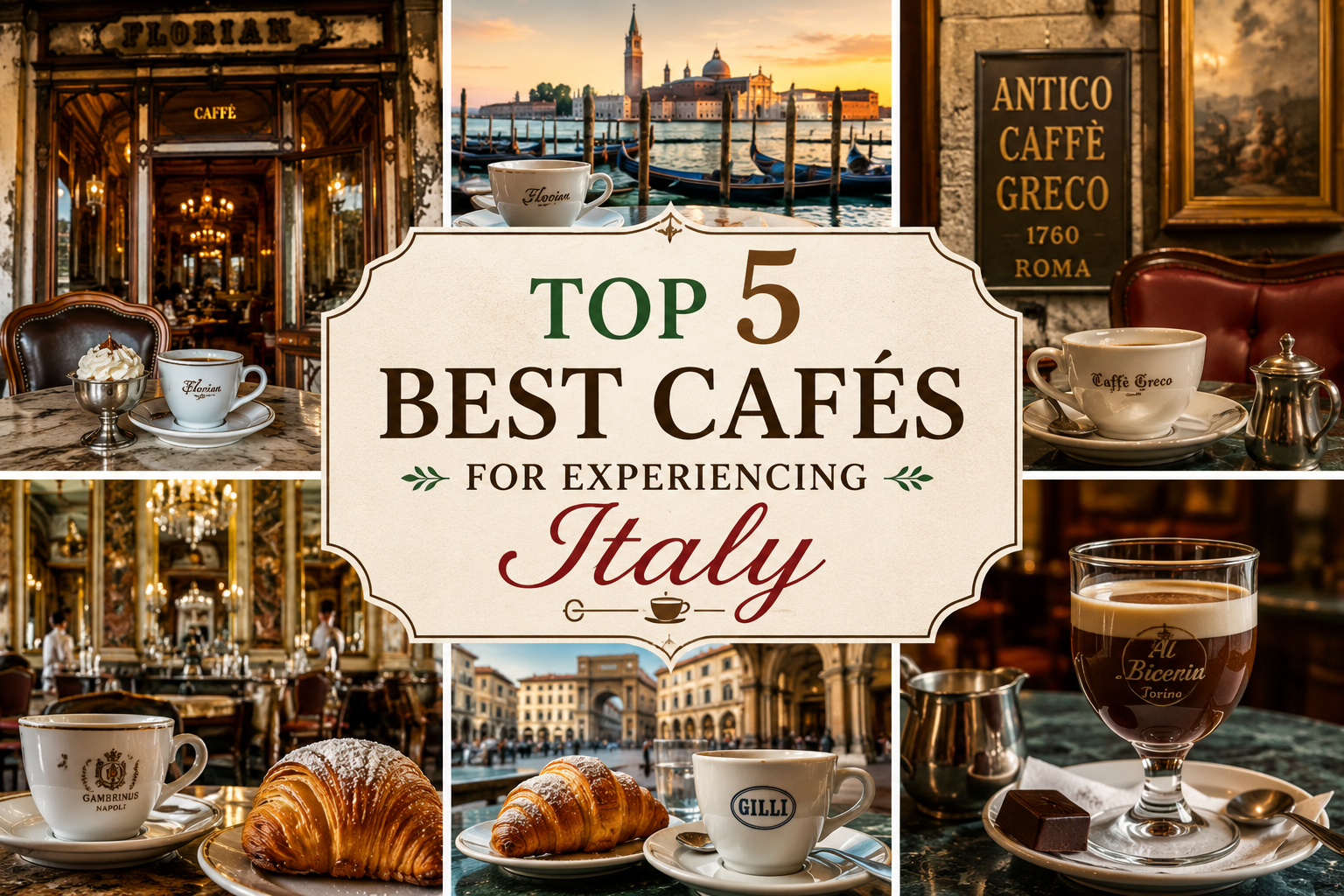
1. Caffè Florian — Venice
Few cafés in the world are as legendary as Caffè Florian. Located directly in St. Mark’s Square, this historic café has welcomed guests since 1720 and remains one of the oldest cafés in Europe.
Inside, velvet seating, gilded mirrors, and frescoed walls create an atmosphere of timeless elegance. Outside, live orchestras perform beneath the arcades while visitors sip espresso overlooking the square.
Ordering coffee here is not simply about the drink — it is about experiencing centuries of Venetian culture and refinement.
What to order:
- Espresso
- Classic Venetian hot chocolate
- Aperitivo with small Venetian cicchetti
2. Antico Caffè Greco — Rome
Tucked along the fashionable Via dei Condotti in Rome, Antico Caffè Greco feels like stepping into another century.
Founded in 1760, the café became a gathering place for writers, artists, and intellectuals including Goethe, Byron, and Keats. Rich red interiors, antique furnishings, and walls lined with artwork give the café a distinctly old-world atmosphere.
Despite its fame, it still captures the ritual of traditional Roman coffee culture — elegant, unhurried, and deeply social.
What to order:
- Cappuccino in the morning
- Espresso Romano
- Traditional pastries
3. Gran Caffè Gambrinus — Naples
In Naples, coffee is almost a religion, and Gran Caffè Gambrinus is one of the city’s most iconic institutions.
Located near the Piazza del Plebiscito, the café combines Belle Époque luxury with authentic Neapolitan energy. Marble interiors, chandeliers, and ornate details reflect the grandeur of southern Italy’s café tradition.
Naples is famous for serving some of the strongest and richest espresso in Italy, and Gambrinus is the perfect place to experience it properly.
What to order:
- Neapolitan espresso
- Sfogliatella
- Espresso with a side of sparkling water
4. Caffè Gilli — Florence
Elegant and sophisticated, Caffè Gilli has been part of Florentine life since the 18th century.
Situated in the heart of Florence near Piazza della Repubblica, the café is known for its refined interiors, pastry displays, and classic Italian atmosphere.
The experience here feels distinctly Florentine — stylish but understated, historic yet contemporary. It is the ideal place to pause after exploring Florence’s art-filled streets and Renaissance architecture.
What to order:
- Cappuccino and cornetto
- Florentine pastries
- Afternoon aperitivo
5. Caffè Al Bicerin — Turin
For a quieter and more authentic northern Italian café experience, Caffè Al Bicerin is a true hidden gem.
Located in Turin, this historic café is famous for inventing the city’s signature drink: the Bicerin — a layered combination of espresso, chocolate, and cream.
Small, intimate, and deeply traditional, the café reflects the sophisticated coffee culture of Turin, a city often overlooked by travelers but beloved by Italians.
The atmosphere feels timeless, making it one of the most authentic café experiences in Italy.
What to order:
- Traditional Bicerin
- Dark chocolate pastries
- Espresso with gianduja chocolate
Italy’s cafés are more than places to drink coffee — they are cultural landmarks woven into daily Italian life. Whether you are sitting beneath the arcades of Venice, enjoying espresso in Rome, or discovering historic cafés in Turin, each experience offers a glimpse into the elegance, tradition, and slower rhythm that define Italy itself.
The best way to experience Italian café culture is simply to slow down, stand at the counter like a local, and savor the moment — one espresso at a time.